

Facing the Megathrust: The Role of Law in Providing Protection to Society
Written by: Nouval Agung Bima
What is a Megathrust?
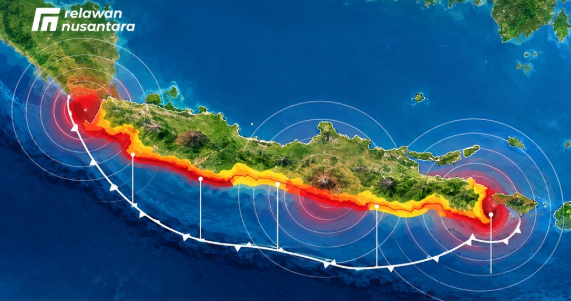
Source: volunteers.nusantara
A megathrust is a very large earthquake that occurs in subduction zones due to the movement of tectonic plates under each other. The subduction zone in Indonesia stretches from western Sumatra, southern Java, Bali, and Nusa Tenggara to eastern Indonesia. This plate movement has the potential to cause earthquakes exceeding magnitude 8.0 to 9.0 and tsunamis in coastal areas.
It should be noted that potential is not a prediction when an earthquake will occur. To date, science and technology have not been able to predict the exact date or time an earthquake will occur. Information regarding the potential for megathrust is a reminder of geological conditions. It’s not a sign that an earthquake will occur anytime soon. Therefore, we must focus on disaster preparedness.
Legal Umbrella for Disaster Management
Law No. 24 of 2007 concerning Disaster Management (Law No. 24/2007) views disaster management as a series of activities carried out before, during, and after a disaster occurs. Therefore, disaster management is not only related to emergency response, but also encompasses mitigation, preparedness, emergency response, and recovery. This approach demonstrates that community protection should be established before a disaster occurs, rather than only after the disaster has caused casualties and damage.
This framework also does not stand alone. Disaster risk reduction efforts relate to various aspects of development, including spatial planning, building standards, environmental protection, and local governance. Therefore, development should consider the characteristics and disaster risks of each region. In this context, law serves not only as a basis for disaster response but also as an instrument for preventing and mitigating disaster impacts from the development planning stage.
Law No. 24/2007 places the central and regional governments as responsible for disaster management. According to Article 6, the government is responsible for:
- Reducing disaster risks and integrating them into development programs;
- Protecting communities from the impact of disasters;
- Ensure the fulfillment of the rights of communities and refugees; and
- Provide a disaster management budget.
Meanwhile, local governments have similar responsibilities:
- Community protection;
- Risk reduction combined with development; and
- Budget allocation through APBD
On the other hand, the public is not merely positioned as recipients of protection. Article 26 grants everyone the right to:
- Gain protection and a sense of security;
- Disaster education and training
- Information regarding disaster management policies; and
- Opportunity to participate in decision making and carry out supervision.
Society also has an obligation to:
- Maintain environmental sustainability;
- Carrying out disaster management activities; and
- Convey correct information to the public.
Thus, facing risks such as megathrust is not only the government’s responsibility, but requires collaboration between the state and society.
Inclusiveness of Disaster Management for Vulnerable Groups
Source: Rian Jaya Safety
Disaster management cannot be implemented with the same approach for all communities. Regional conditions, housing conditions, and each person’s ability to access information and evacuate can influence their level of vulnerability to disasters.
According to Law No. 24/2007, Article 55, protection must also address vulnerable groups, including infants, toddlers, and children, pregnant/nursing mothers, people with disabilities, and the elderly. During emergency response, these groups receive priority in rescue, evacuation, security, and health and psychosocial services. Therefore, mitigation efforts need to consider who lives in at-risk areas and what obstacles they might face when a disaster occurs.
First, development in earthquake- and tsunami-prone areas, including coastal areas, must take into account the characteristics and potential disaster risks. Settlements, public facilities, and infrastructure in coastal areas must be planned with the potential for earthquakes and tsunamis in mind, as well as public access to safer locations. Development that ignores these risks can increase community vulnerability when a disaster occurs.
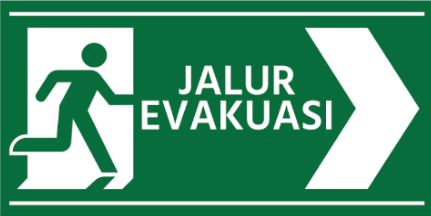
Second, access to evacuation routes and sites must be part of development planning. Evacuation routes should not simply be available on maps; they should be easily found, accessible, clearly signposted, and consider the needs of the people who will use them. This is especially important for people with disabilities, the elderly, and children, who may require more time or special assistance to evacuate.
Third, inclusivity also concerns access to information and early warnings. Communities with limited access to information should not be left behind when disaster warnings are issued. Information needs to be delivered through various media and in formats that are easily understood and accessible to groups with different needs. For people with disabilities, for example, warning systems need to consider hearing, vision, and mobility impairments. For children and the elderly, disaster information needs to be delivered in appropriate language and methods.
Communities as the Main Actors in Disaster Mitigation
Earthquake and tsunami mitigation cannot solely depend on the government’s response when a disaster occurs. Law No. 24/2007 Article 26 paragraph (1) letters b, c, and e positions the community as a party that has the right to obtain disaster education and training, obtain information regarding disaster management policies, and participate in decision-making relating to themselves and their community. This right shows that community preparedness is part of the implementation of disaster management, not merely a complement to government policy. In fact, Article 27 letter b requires everyone to carry out disaster management activities. Thus, the community has a position as a subject that plays a role in building preparedness from before a disaster occurs.
In the context of earthquakes and tsunamis, this participation needs to be translated into practical decision-making skills in emergency situations. Article 17 of Presidential Regulation Number 93 of 2019 concerning the Development and Strengthening of Earthquake Information Systems and Tsunami Early Warning stipulates capacity building through community preparedness education, disaster literacy, earthquake and tsunami education, and independent preparedness and evacuation drills. This is crucial because early warnings are only effective if the public is able to understand the information and determine immediate action. Regular evacuation simulations should focus on identifying evacuation routes and points, practicing responding to tsunami warnings, and conducting first aid training to equip the community with the capacity to act in an emergency.
Understanding Nature as Part of a Mitigation Strategy
Source: Antares
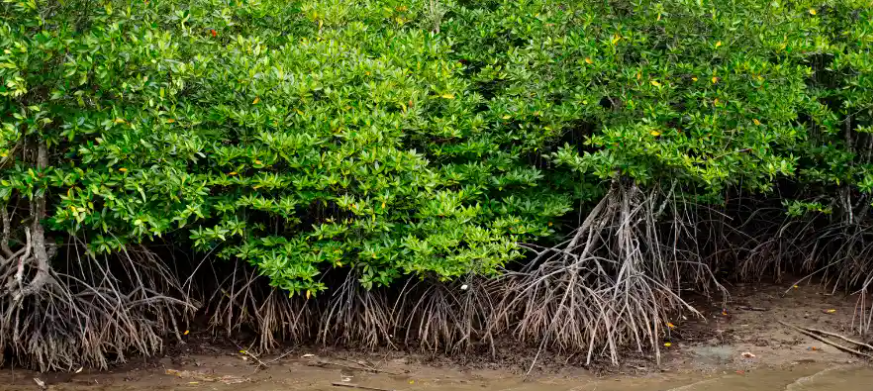
Disaster mitigation doesn’t always have to involve building physical infrastructure like embankments or breakwaters. Coastal ecosystems can also be part of a risk reduction strategy. This is achieved through mangroves, a sustainable approach to nature-based solutions. Research on the Aceh coast shows that mangroves can contribute to reducing the threat of tsunamis, with effectiveness influenced by density, thickness, slope, tree diameter, and mangrove species. Therefore, maintaining, rehabilitating, and increasing mangrove density can be part of efforts to build coastal resilience.
A similar approach can be applied by considering coastal ecosystems more holistically, including coral reefs and seagrass beds. These ecosystems can be positioned as an additional layer of protection, working alongside disaster infrastructure. With this approach, mitigation focuses not only on physical development but also on restoring the ecological function of the areas that are part of the coastal protection system.
However, nature-based solutions doesn’t mean nature can stop a tsunami. No ecosystem can guarantee coastal areas will be free from the impacts of a tsunami. Therefore, a more realistic strategy is to integrate ecosystem protection with risk-based spatial planning, early warning systems, evacuation routes, and disaster infrastructure. Studies in Aceh show that mangrove rehabilitation was carried out on a large scale after the tsunami, including the rehabilitation of approximately 4,076.25 hectares of mangrove area. Thus, innovation in mitigation is not simply a matter of choosing between “nature or concrete,” but designing both to complement each other in building the resilience of communities and coastal areas.
Source:
Legislation
Law Number 24 of 2007 concerning Disaster Management
Presidential Regulation Number 93 of 2019 concerning the Development and Strengthening of Earthquake Information Systems and Tsunami Early Warnings
Journal
Maharani, Made Dwipa Kusuma, Jasmine Masyitha Amelia, and Gressy Sari Br Sitepu, 2022, “Management of Mangrove Ecosystems as a Disaster Mitigation Effort in Aceh Province,” Undiksha Biology Education Journal, Volume 9, Number 2, p. 151.
Nirmala, Lintang Wahyusih, et al., 2025, “Exploring the Needs of People with Disabilities in Disasters: Efforts to Build an Inclusive Disaster-Responsive Society in Surabaya,” Kumawula: Journal of Community Service, Volume 8, Number 3, p. 1007.
Internet
Rizal Rahman, “Megathrust: What Is It and How Big Is the Risk for Indonesia?” https://www.rumahzakat.org/megathrust-apa-itu-risikonya-bagi-indonesia/, accessed September 15, 2026.
Sekolapedia, “BMKG Explanation Regarding the Potential for Megathrust Earthquakes and Anticipatory Steps You Should Know”, https://daftarsekolah.spmb.teknokrat.ac.id/2026/07/penjelasan-bmkg-soal-potensi-gempa-megathrust-dan-langkah-antisipasi-yang-harus-diketahui/, accessed September 15, 2026.
Picture
https://www.instagram.com/p/DdTVzUQFJoe/?utm_source=ig_web_copy_link&stkn=NTc4MTIwNjQ2YQ==
Editor by: Anisa Khalilatuz Zahra